Ralek
— Ralek / Process Documentation

Catalogue Standards.

Every entry in the Ralek catalogue passes through the same documented process: formulation review, sourcing verification, independent batch analysis and nutritional research alignment. This page describes that process in full.

Avg. Review Time
12–18
days per entry
Sources Reviewed
3–7
per ingredient
Entries Rejected
34%
of candidates
Revision Cycle
6
months maximum
01 / Process Overview

Four-stage entry process.

01
Stage One

Formulation Review

The formulation review is the entry point for every candidate product. The Ralek editorial team reviews the complete ingredient declaration against the formulator's published specification sheet. Serving size, active ingredient content, excipients, and delivery form are all recorded. Any discrepancy between the label and the specification sheet results in immediate deferral pending clarification from the formulator.

What we examine
  • · Complete ingredient list including excipients
  • · Active content per declared serving size
  • · Delivery form (powder, soft-gel, liquid extract)
  • · Published specification sheet consistency
  • · Proprietary blend disclosure status
Automatic rejection criteria
  • · Undisclosed proprietary blend quantities
  • · Label-specification discrepancy not resolved within 14 days
  • · No complete ingredient disclosure available
  • · Formulator refuses to provide specification documentation
02
Stage Two

Sourcing Documentation

Each ingredient in a candidate formulation is traced to its originating supplier. Country of origin, extraction or cultivation method, and food-grade processing standards are verified through supplier documentation. Where a single formulation contains multiple ingredients from different geographic origins, each is documented separately. Supply chain documentation is archived alongside the catalogue entry.

Supplier sourcing documentation folders open on a wooden desk in a well-lit office, with botanical ingredient samples in small glass vials arranged beside the papers
Origin Verified
100%
Unique Suppliers
22
Countries Covered
11
03
Stage Three

Independent Batch Verification

Independent batch verification is the stage where declared ingredient content is tested against actual content. Ralek requests batch verification certificates from independent analysis facilities — organisations with no commercial relationship to the formulator. Results are cross-referenced against the declared active ingredient content. Where a certificate is unavailable, the listing carries the notation "verification pending" until a result is received and reviewed.

Batch verification request — standard terms
Facility type: Independent analysis laboratory
Relationship: No commercial connection to formulator
Analysis scope: Active ingredient content, heavy metals, contaminants
Certificate format: Certificate of Analysis (CoA) with batch code
Result status: Recorded in catalogue entry — verified / pending
Verification outcomes by entry type
Third-party verified
74%
Verification pending
18%
Verification declined or failed
8%
04
Stage Four

Nutritional Research Alignment

Nutrient role descriptions in every Ralek entry are drawn exclusively from authorised health claims under EU Regulation 1924/2006 and reference values from the British Nutrition Foundation and the European Food Safety Authority. A nutrition research specialist reviews all role descriptions prior to publication. Descriptions that extrapolate beyond established authorised claims are not permitted in any catalogue entry.

EU Regulation 1924/2006

Authorised health claims for food and food supplements form the boundary for all nutrient role descriptions in this catalogue. No description goes beyond what is established under this regulation.

British Nutrition Foundation

Reference values for adult men published by the BNF inform serving size contextualisation. NRV percentages cited in entries refer to BNF reference values for males aged 19-64.

European Food Safety Authority

EFSA scientific opinions on dietary reference values are consulted for upper intake levels and for context around nutrient interactions documented in individual catalogue entries.

02 / Supplier Network

Where ingredients originate.

Large world map printed on kraft paper with coloured pins marking supplier origin locations for botanical and mineral ingredients, laid flat on a wooden table

Supplier locations documented across the Ralek catalogue. Each marker represents a confirmed supply relationship with documented food-grade processing standards on file. The catalogue currently draws from 22 verified suppliers across 11 countries.

United Kingdom
8 suppliers

Whey protein isolate, magnesium citrate, B-complex vitamins, tart cherry concentrate, and several mineral blends. UK-manufactured formulations benefit from food-grade facility oversight under UK Food Safety legislation.

Germany
4 suppliers

Creatine monohydrate (Creapure-licensed), zinc bisglycinate chelate, and CoQ10 precursor materials. German ingredient manufacturers maintain particularly detailed documentation practices.

India (Rajasthan & Karnataka)
3 suppliers

Ashwagandha KSM-66, turmeric curcumin, and black pepper extract. Organic certification verified for all Indian-origin botanical entries. Supply chain documentation includes harvest season records.

Norway & Scandinavia
3 suppliers

Omega-3 fish oil from sustainably harvested anchovies, iron bisglycinate, and selenium yeast. Friend of the Sea certified supply chains for all marine-origin material in the catalogue.

Japan & Northeast Asia
4 suppliers

Kaneka-licensed CoQ10 ubiquinol, eleuthero root extract, and shiitake mushroom beta-glucan concentrate. Japanese ingredient suppliers typically provide the most complete documentation packages in the catalogue.

03 / Standards Commitment

What the catalogue commits to maintaining.

Standard 01

No Undisclosed Ingredients

No entry in this catalogue lists a formulation that uses proprietary blends to conceal individual ingredient quantities. Full disclosure is a minimum entry requirement — not an optional quality indicator.

Standard 02

Active Content Matches Label

Where independent batch verification has been completed, the analysis result is compared against the declared active content. Discrepancies result in entry suspension until the formulator provides updated specification documentation.

Standard 03

No Extrapolated Nutrient Claims

Every nutrient role description in this catalogue is drawn from authorised claims under EU Regulation 1924/2006. Descriptions that go beyond what is established in that framework are not permitted in any catalogue entry, regardless of available research.

Standard 04

Food-Grade Processing Confirmed

Active ingredients are sourced from documented suppliers, with each batch accompanied by a certificate of composition. Sourcing prioritises suppliers whose facilities maintain food-grade processing standards verified through documentary evidence.

Standard 05

Revision Cycle Maximum 6 Months

All entries carry a publication date and a last-reviewed date. No entry remains without a review for more than six months. When a formulator changes their ingredient specification or sourcing arrangement, the corresponding entry is updated or suspended within 14 working days of notification.

Standard 06

Full Independence Maintained

Ralek holds no commercial or financial relationship with any supplement formulator, distributor, or retailer whose products appear in the catalogue. Independence is not a policy aspiration — it is the condition under which the catalogue operates.

04 / Verification Detail

What batch verification covers.

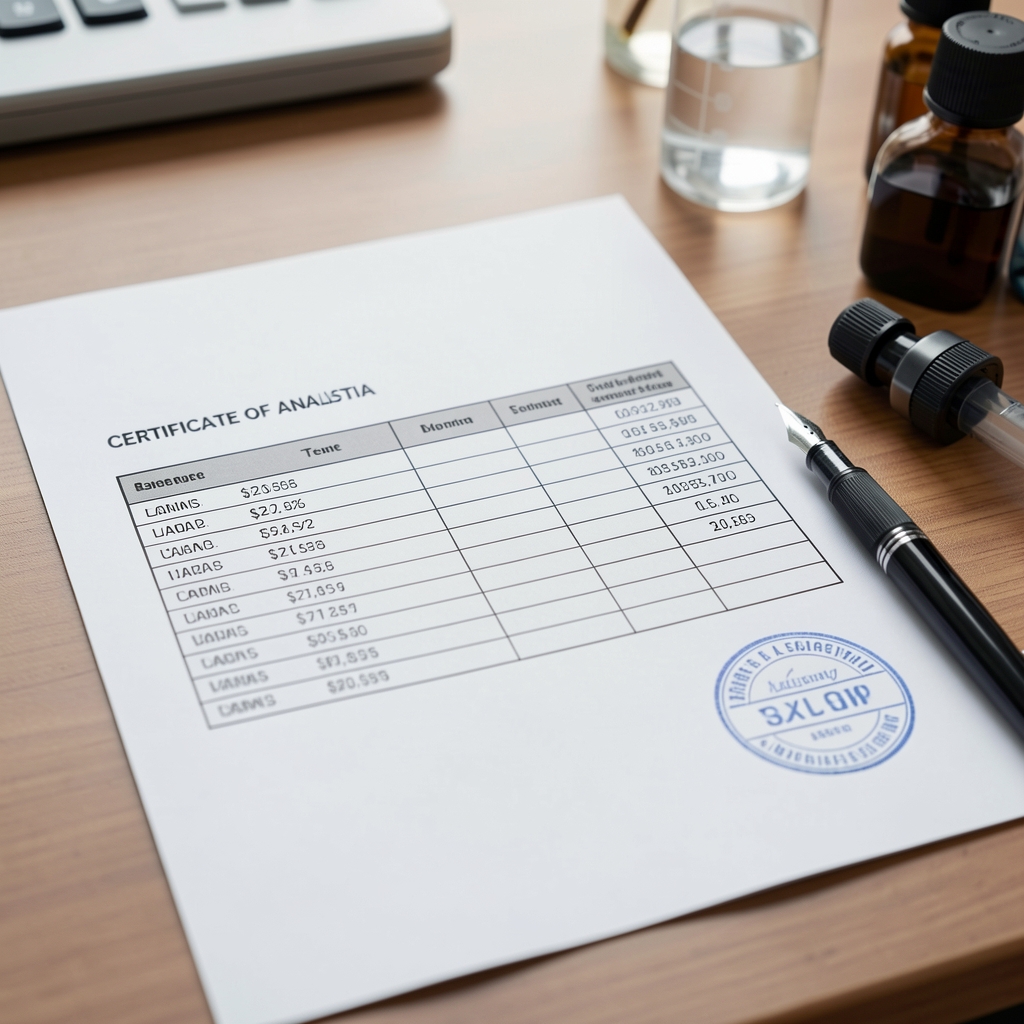
Batch verification in the Ralek context refers specifically to the process of obtaining a Certificate of Analysis from an independent laboratory that has no commercial relationship with the formulator being assessed. The certificate confirms that the active ingredient content declared on the product label corresponds to the content found by analysis.

The scope of independent analysis varies by ingredient type. For botanical extracts, analysis focuses on the declared standardised compound — rosavins in rhodiola, withanolides in ashwagandha, curcuminoids in turmeric. For mineral formulations, elemental content per declared serving is the primary metric. For omega-3 concentrates, total EPA and DHA content and oxidation levels (TOTOX score) are both assessed.

Heavy metal screening — lead, cadmium, arsenic, mercury — is requested for all botanical entries and for all entries sourced from regions where soil-based contamination has been documented in published nutritional research. Results are noted in the entry record alongside the CoA reference number.

Close-up of a Certificate of Analysis document on a desk with an ink pen resting beside it, showing test results columns and a laboratory stamp in a quality-control environment
Standard analysis scope — Ralek catalogue
Botanicals
Standardised compound content, heavy metals, microbial limits
Minerals
Elemental content by ICP analysis, chelation confirmation
Omega-3
EPA + DHA content, TOTOX score, peroxide value, anisidine
Vitamins
Active form confirmation, potency against declared NRV
05 / Methodology Disclaimer

Ralek is an independent wellness resource focused on everyday nutrition and active lifestyle practices for men. The content is not affiliated with any governmental or institutional body.

Ingredient profiles in Ralek supplement entries are selected based on published nutritional research and undergo independent batch verification for quality and labelling accuracy. Active ingredients are sourced from documented suppliers, with each batch accompanied by a certificate of composition. Sourcing prioritises suppliers whose facilities maintain food-grade processing standards.

We recommend speaking with a qualified wellness or nutrition professional before introducing any supplement to your daily routine, particularly if you have specific dietary requirements.